mHealth Demo | Utility of GHF360 Comm.Health App for Clinic-Based Systematic Management of Coverage & Outcomes of Health Screenings & Vaccinations

AIMS & OBJECTIVES

Purpose

This report/call-to-action presents an overview/introduction to a service-learning demonstration/training designed to meet specific community health needs while fostering values of ubuntu, civic responsibility and humanitarianism; academic and professional advancement; and experiential growth. At the end of this demo/training preview, participants (health providers/volunteers) seeking to manage health screenings and vaccinations among low- to middle-income communities, will have gained insights on:
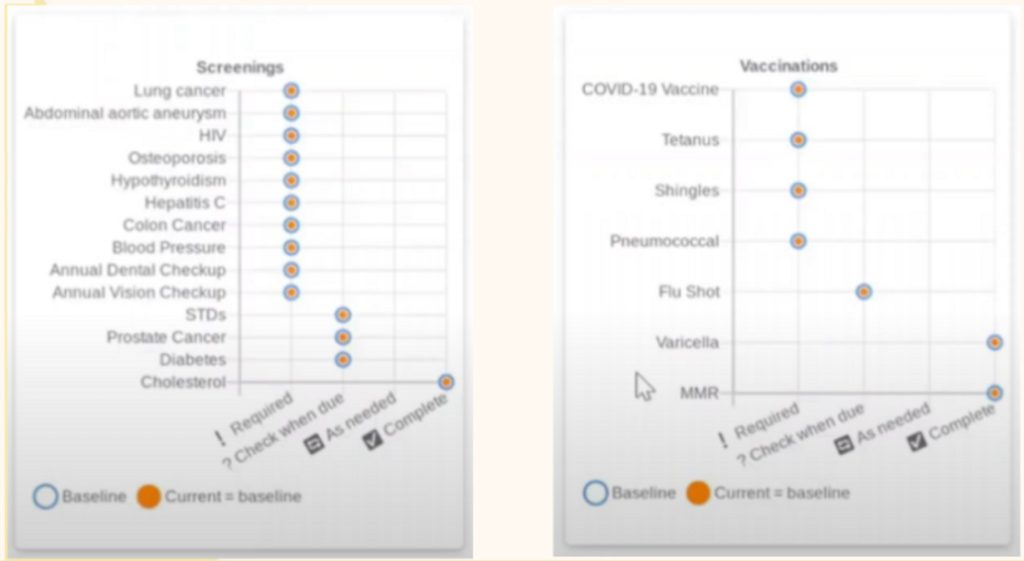
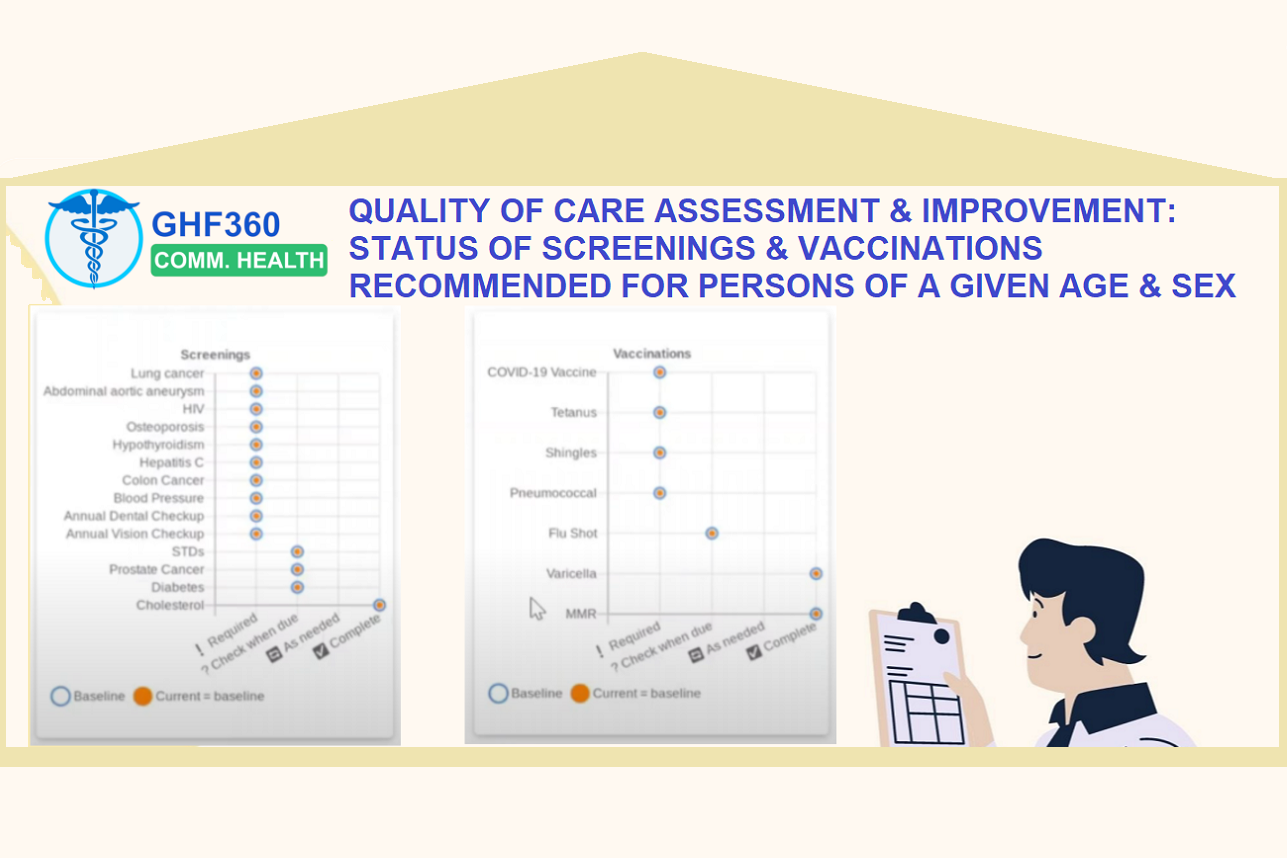
  • The utility of a clinic-based custom-developed mobile health (mHealth) technological innovation, the GHF360 Comm.Health app, to systematically manage (assess/improve) quality of preventive care, and coverage and outcomes of health screenings and vaccinations; more specifically:
  • Addressing each patient’s personal/individual-level health screenings & vaccinations status, including longitudinal patient follow-up to improve individual-level coverage;
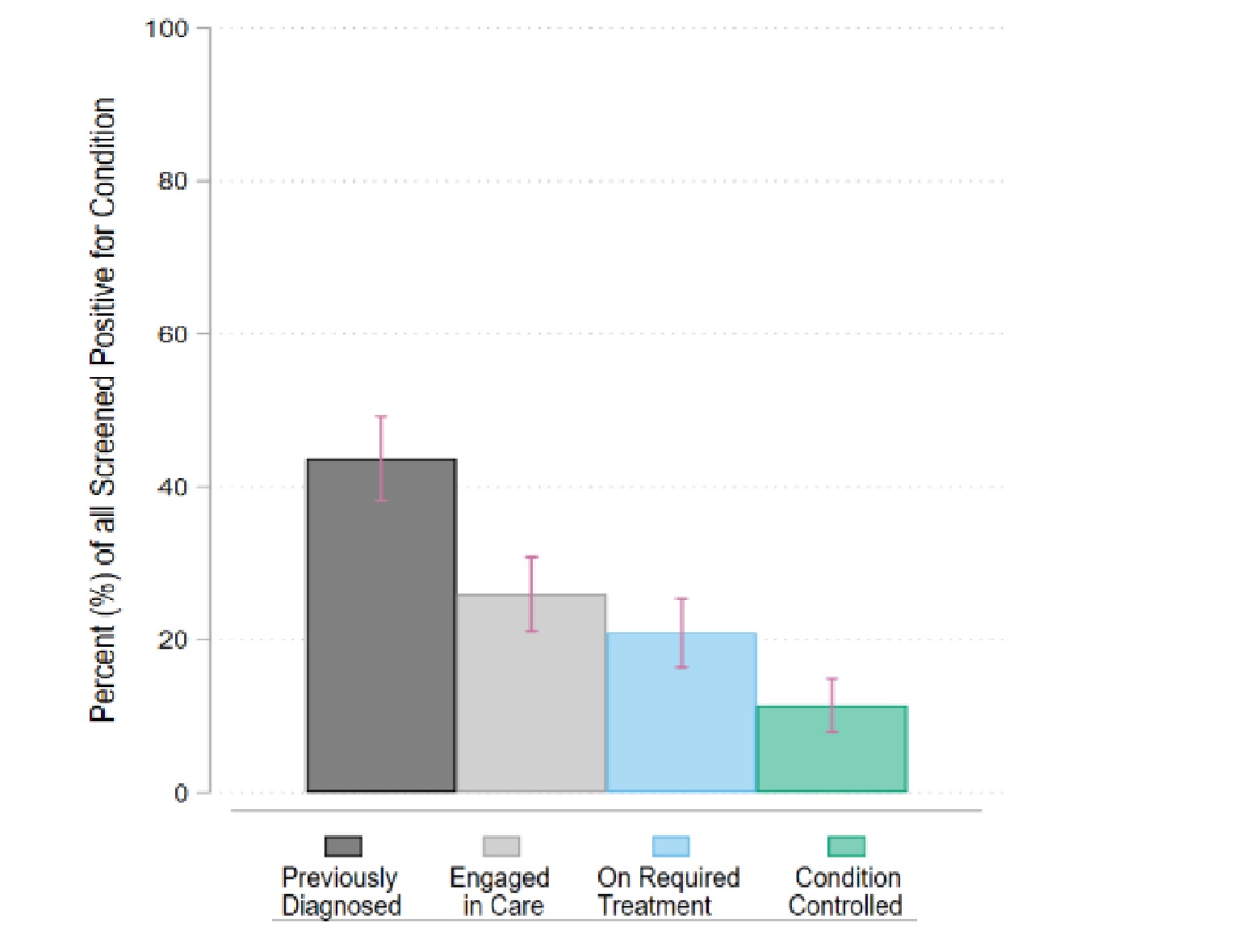
  • Addressing community/group-level health screenings & vaccinations coverage, including longitudinal group follow-up using the cascade of care continuum model ;
  • The ‘workforce multiplier’ potential of mHealth to improve the systematic management of health screenings and vaccinations coverage, and related health outcomes;
TARGET AUDIENCE & IMPLEMENTATION SETTINGS

Call to Action

Informed by the values of ubuntu, civic responsibility & humanitarianism , this service-learning call-to-action seeks to mobilize health screening and vaccination efforts at the service of people most adversely affected by inequities in health outcomes. Towards that end, the target audience/participants and implementation settings of this initiative include, but are not limited to, the following:

Target Audience/Participants

  • Healthcare providers & community health field workers;
  • Including volunteer Clinical Support Associates such as retired health providers;
  • Laboratory, pharmacy, and other allied health professionals;
  • Early career health professionals;
  • Trainees in health disciplines:
  • Medical, public health & allied health discipline scholars/trainees or students;
  • Student clubs/groups (group enrollment);

Implementation Settings

  • Clinic-level sites;
  • Clinical laboratory-run screening test sites;
  • Pharmacy-run vaccination sites;
  • Public health agency/community-level programs, incl. social service, educational (schools, colleges, universities, etc), workplace/occupational, correctional, elder care, travel, hospitality, leisure & other congregate settings; &
  • Managed care health insurance plans;
BACKGROUND & RATIONALE

The Why

The following elucidate the background and rationale:

  • Many people are unaware of the recommended screenings and vaccinations for their age, sex, and current health status, and this information is often not readily accessible;
  • Patients often visit health providers for acute care, with little time allocated for preventive care;
  • Use of mobile health (mHealth) technological innovations custom-developed for systematic management of health screenings and vaccinations in underserved communities has potential to improve coverage;
  • Inequities in health screenings and vaccinations coverage more adversely impacting low- and middle-income communities, were laid bare by the COVID-19 pandemic, thus highlighting the need to accelerate mHealth adoption through this demonstration and training of health providers on the utility of such custom-developed digital health innovations in the clinical decision support workflow in these settings;
DEMOS & SERVICE-LEARNING/TRAINING

How To

Demonstrations of the use of GHF360 Comm.Health App for Systematic Management of Personal/Individual- & Community/Group-Level Coverage & Outcomes of Health Screenings & Vaccinations.

1 – Demo of Health Clinic Workflow Adaptations

Integration of GHF360 screenings and vaccinations clinic associate into an adapted clinic patient care workflow (with the project associate embedded via remote/telehealth modalities or on-site).

*Clinic workflow adaptations.

2 – Demos & Training on Clinic-Based Use of GHF360 Comm.Health App

Systematic management of personal/individual- & community/group-level coverage & outcomes of health screenings & vaccinations.

Demos/Previews of Training

Addressing Personal/Individual-Level Health Screenings & Vaccinations Status

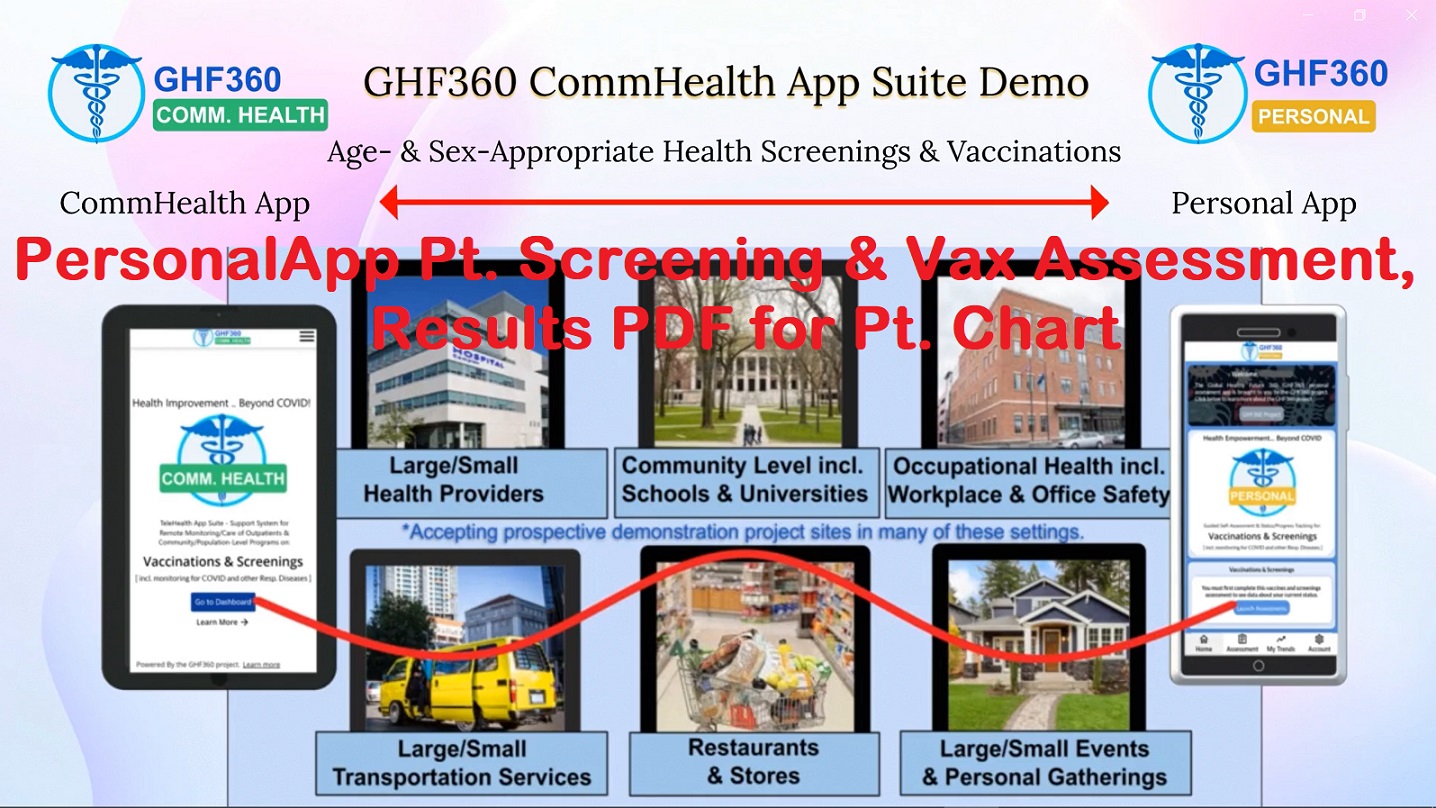
The 4.5 minute video demonstrates a Clinic Support Associate’s use of the GHF360 Comm.Health App to assess recommended screenings and vaccination status at the personal/individual-level, and as indicated, referral to health care provider, laboratory testing and vaccine administration points.
Addressing Community/Group-level Health Screenings & Vaccinations Coverage

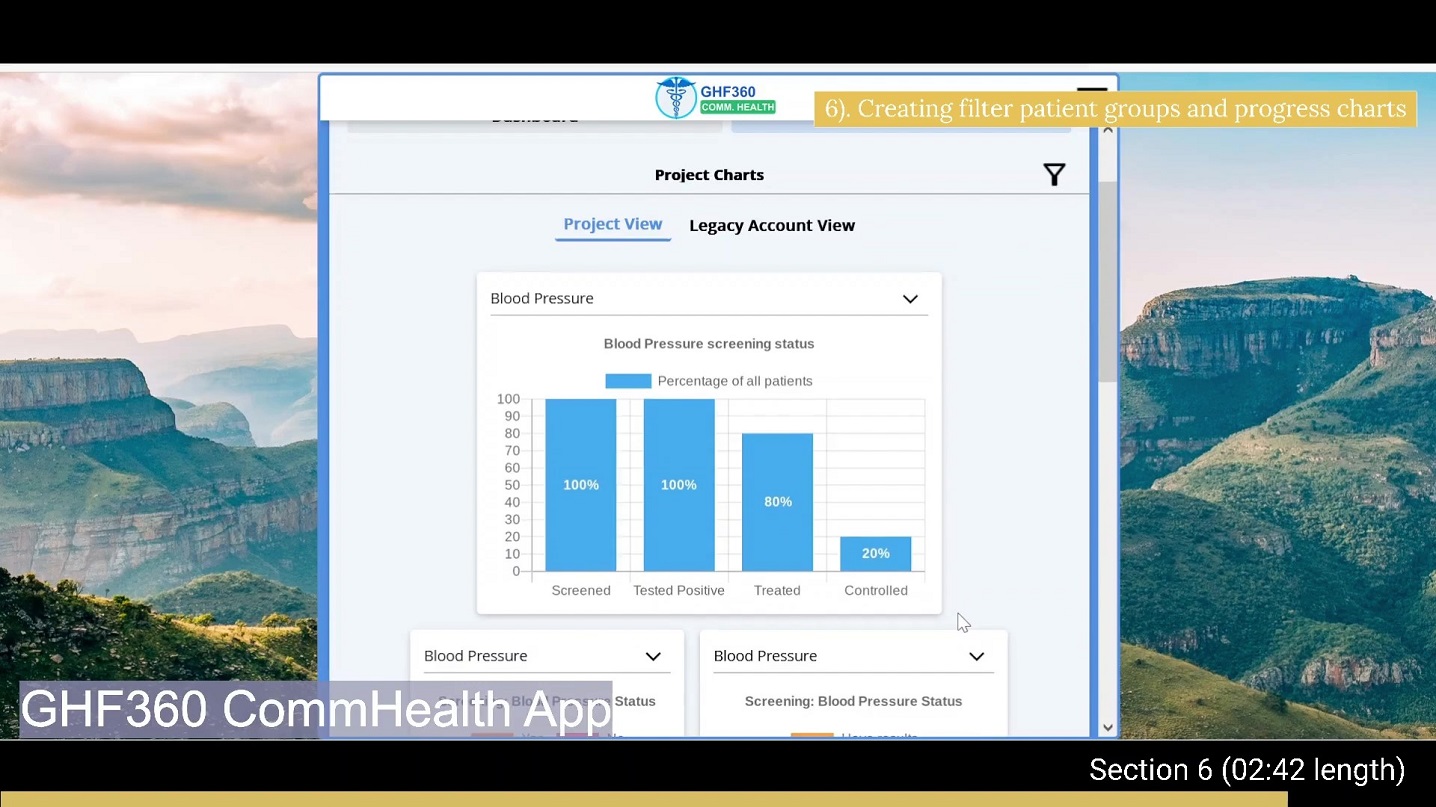
The 3.5 minute video demonstrates a Clinic Support Associate &/or Diagnosing/Prescribing Health Provider’s use of the GHF360 Comm.Health App to conduct continuity of follow-up on community/group-level coverage of screenings and vaccinations (incl. indicated linkage to and retention in the care cascade, and quality assurance towards disease control as needed).
Further Training
3 – Frequently Asked Questions & Feedback Form

These FAQs help clarify a number of questions that have come up in the past, and will be updated as needed. In addition the last item presents a form through which we collect feedback from reviewers of information provided on this page.

-The GHF360 Personal and CommHealth apps allow providers to submit patient information, similar to an EMR, but with a focus on preventive care specifically pertaining to guidelines-recommended age- and sex-appropriate health screenings and vaccinations.
-Towards this end, the app can be used to administer a guided questionnaire for assessing a person’s health screenings and vaccination status, then the app retrieves/generates results consisting of guidelines-based recommended age- and sex-appropriate health screenings and vaccinations. The results generated serve as a digital decision support reference for review and decision-making by the healthcare providers during a patient consultation.
-The GHF360 CommHealth app therefore allows providers to systematically manage both individual-level and group-level coverage, follow-up & outcomes of health screenings & vaccinations.
-Clinics which do not have EMRs especially derive greater benefit; however, even clinics with EMRs which have similar features often do not implement such features due to a focus on acute care for presenting health problems and complexity/difficulty incorporating (into the clinic’s patient visit workflow) the use of their EMR for this preventive care purpose. This can be easily overcome by the use of the GHF360 Comm.Health app to undertake preventive care initiatives focusing on health screenings and vaccinations. The GHF360 PDF output with results can be uploaded into the EMR, and printed as a hard copy in clinics which still file/use paper-based medical records.

-First, by using anonymized id numbers for each person served, the app never collects personally identifiable information (PII) which can be used to easily distinguish an individual’s identity such as name, address, birth date, national ID or social security numbers, etc.
-Further, data transmitted to the database is encrypted and protected by SSL, and access to the app confidential database contents is blocked for any unauthenticated user(s) other than a patient’s healthcare provider.
-Clinics/healthcare centers must maintain and secure the confidentiality of their own lookup system outside the app for use to link the anonymized id numbers used in the app to individuals’ medical records at the clinic.

-The GHF360 app is custom-designed to be of most benefit to clinics which serve low-income, underserved communities globally. Many such clinics may not even have EMRs and need digital mobile health (mHealth) decision support systems such as the GHF360 app which can provide capacity augmentation and strengthening.
-Further, the communities they serve have particular needs for health empowerment through educational materials that the app generates. Many people in low-income communities may not get preventive health checkups regularly and may not be aware of what screenings and vaccinations are recommended for them, hence their particular needs for health empowerment may also be addressed through educational materials that the app generates.
-People in these communities are also at a higher risk of developing life-threatening health conditions that are screening-detectable &/or vaccine preventable, allowing for timely/earlier detection, prevention, treatment and health improvement.

-Trained Clinical Support Associates &/or volunteers who learn how to use the app can administer the assessment questionnaire to patients instead of medical doctors. They could do so in waiting rooms or over the phone before consultations. This takes the burden off of medical doctors but still allows them to review patient’s assessment answers and results (guidelines-based recommendations) to improve quality of care. The app is a ‘force multiplier’ which enables clinics to do more with less.
-An earlier section on this page provides an overview on integration of a GHF360 screenings and vaccinations Clinic Support Associate into an adapted clinic patient care workflow (with the project associate embedded via remote/telehealth modalities or on-site).
-Training has been simplified into an initial review of an overview of how the app can be used provided on this page, and if further training is needed, this can be followed by a short course offered in a Collaboratory/Community of Practice context through a series of 20-minute webinars. Please see the last item in this section to submit a feedback form incl. your email to receive further info. In addition, the last part of info on this page provides links to enable following GHF360 on LinkedIn to also receive updates provided on that platform as well.

Service-Learning & Preventive Health

Applicability

Through this mHealth service-learning demonstration/training initiative, participating clinics & Clinical Support Associates undertake:

  • Community engagement and civic responsibility;
  • Use of digital health innovations for assessing and improving coverage of health screenings and vaccinations;
  • Capacity augmentation and strengthening through an mHealth ‘workforce multiplier’ approach;
  • Assessment and improvement of quality of preventive care and health outcomes among low- and middle-income communities (LMIcs);

Conclusion: The initiative demonstrates how integration of mobile Health (mHealth) technologies in LMIc settings can be effectively undertaken to a) augment and strengthen capacity, and b) systematic management (assessment/improvement) of quality of preventive care, and coverage and outcomes of health screenings and vaccinations.

TO LEARN MORE

Join Us

Click “Follow” below